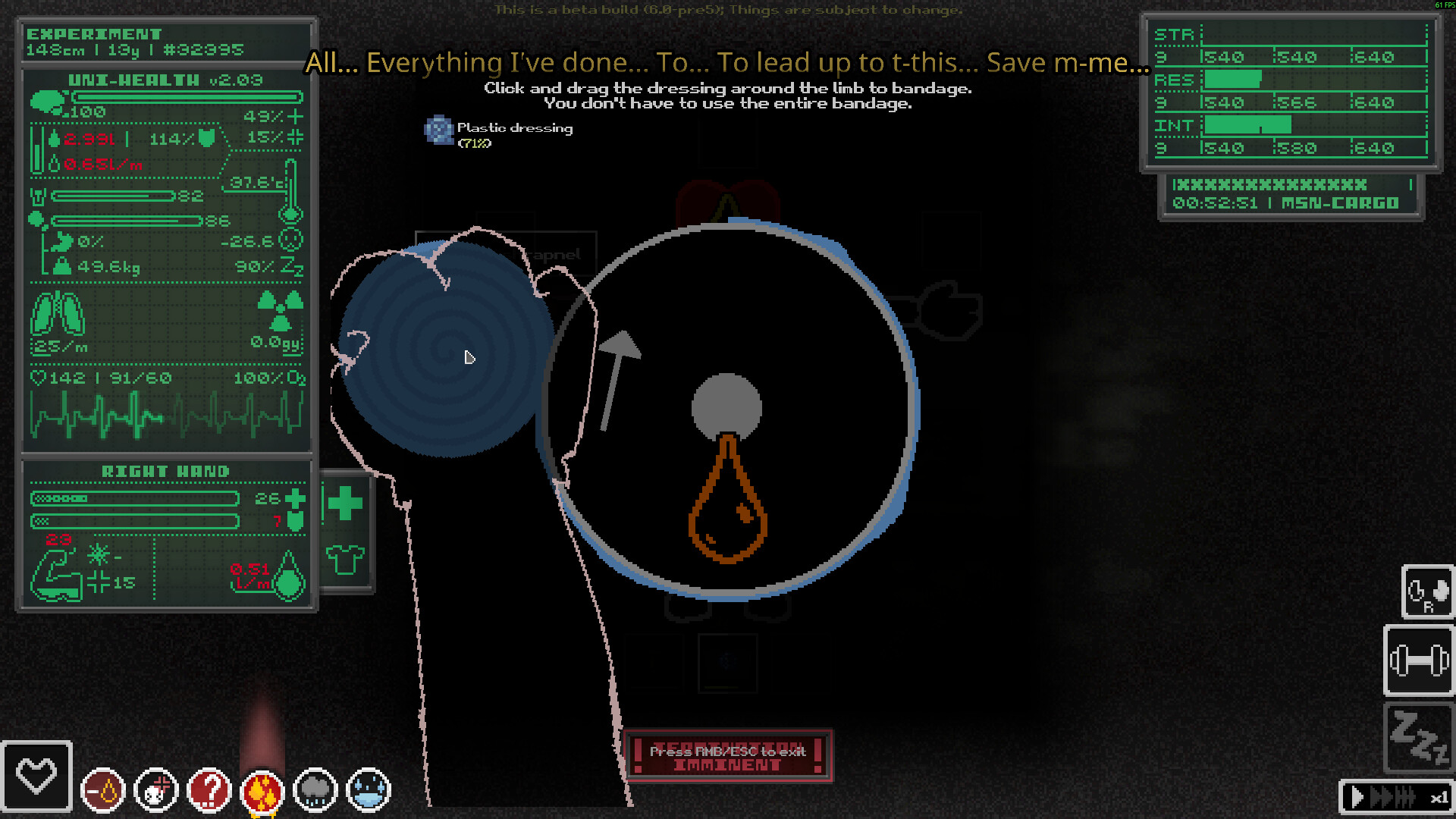
Inspect Damaged Skin and Follow the Infection Arrow
Wounds with damaged skin can become infected, particularly when untreated or exposed to contamination. Open the health panel with R, inspect the affected limb, and follow its infection moodle or trend arrow to see whether the infection is improving or spreading.
Start local wound care early, then check the direction of the infection rather than assuming an application finished the job. An increasing trend followed by sepsis indicators or worsening overall condition means the problem needs more than another ordinary bandage.
Keep Demo Treatment Separate From Other Builds
This wound-care sequence follows the documented demo health system. The default R control is described for Steam demo 7.0.1; keep the Steam demo, itch prototype, and full release separate when matching controls and treatment behavior.
Clean, Cover, and Reassess the Wound
- Open the R health panel to inspect the affected limb and its infection indicators.
- Apply Antiseptic to the affected limb through its medical or topical interaction to begin local infection care.
- Cover damaged skin with a Sterilized dressing or infection-countering Alginate dressing when available, supporting local wound care.
- Recheck the infection trend arrow after an interval to see whether the infection is still increasing or has begun shrinking.
- Repeat local antiseptic care if the arrow is still rising, then reassess its direction.
- Check overall blood pressure, temperature, and consciousness if infection keeps increasing, looking for systemic deterioration.
- Use antibiotics alongside antiseptic treatment of affected limbs when systemic infection develops, while continuing to monitor the body's overall condition.
Choose Dressings and Antiseptic for Local Care
Antiseptic is applied to the affected limb through the appropriate medical or topical interaction. For damaged skin, use a Sterilized dressing or an infection-countering Alginate dressing when available, then return to the infection indicator to assess the result.
Local care may need repeating when the infection arrow continues to rise. A shrinking arrow is the useful sign that the infection is moving in the right direction; covering the wound alone does not tell you that its infection has been controlled.
Recognize the Shift From a Local Infection to Sepsis
The Infection moodle describes a swollen, warm infection site. Painful infection adds dark pus and greater swelling, while Severe infection describes rapid, painful spread across the limb with a risk of sepsis.
Life-threatening infection describes spread to other limbs, necrosis beginning in the infected limb, and sepsis setting in. This is a reason to check the whole body's condition immediately, rather than judging the situation only by the original wound.
Sepsis brings confusion, lowered blood pressure, and fever. Severe sepsis adds increased heart rate, lightheadedness, a strong fever, and signs of organ dysfunction, indicating that the emergency is progressing beyond the local injury.
An infection arrow that keeps increasing, together with sepsis or septic-shock indicators and worsening blood pressure, temperature, or consciousness, means local care has not controlled the problem. Continue antiseptic treatment of affected limbs and use antibiotics while watching the overall response.
Prepare Before the Next Injury
- Keep dressings available for wounds: bleeding drains blood volume and can lead to infection.
- Keep Antiseptic and suitable dressings accessible so you can begin local care without a lengthy inventory search.
- Inspect damaged skin after an injury instead of waiting for an infection warning to become severe.
- Continue checking the infection trend after treatment, including whether the arrow shows the infection shrinking.