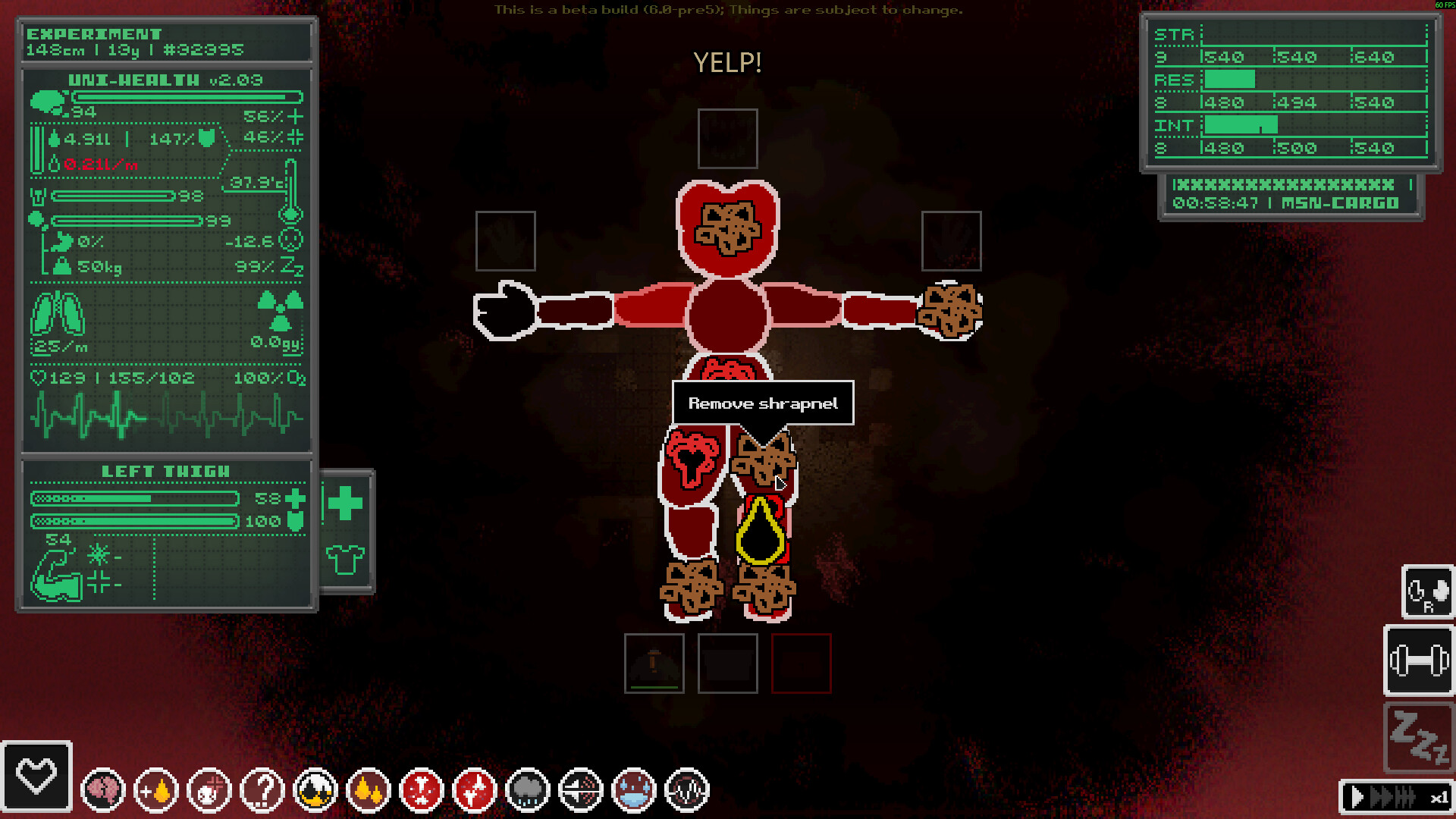
Compare the injured limb with your overall vitals
Press R to open the demo health panel, inspect individual limbs, and compare their injuries with blood volume, blood pressure, heart rhythm, respiration, oxygen saturation and brain integrity. Stop moving and prioritize circulation or breathing when those readings deteriorate, even if a visible limb injury seems more obvious.
The basic controls referenced here describe Steam demo 7.0.1, and the panel procedure is documented for the demo. Keep the itch prototype and full release separate when comparing medical values or treatment instructions.
What each part of the panel tells you
| Panel check | What to look for |
|---|---|
| Individual limb condition | Inspect skin, muscle, bone and embedded-object problems. These local injuries help identify where treatment is needed. |
| Blood volume and circulation | Compare blood volume, blood pressure and heart rhythm. Rapidly falling volume or unstable rhythm calls for stopping to address the immediate threat. |
| Breathing and oxygenation | Read respiration and oxygen saturation together. Deterioration takes priority over routine hunger or inventory maintenance. |
| Brain integrity and consciousness | Check brain integrity separately and treat failing consciousness as a warning to stop. After treatment, verify that consciousness has stopped worsening. |
A localized wound and a whole-body emergency can exist together. A dressing may help an external wound without restoring blood already lost, so the limb check cannot replace the circulation check. Read both before deciding the problem has been handled.
Use a consistent emergency reading order
- Stop moving when blood volume falls rapidly, severe bleeding appears, breathing deteriorates or consciousness begins failing. This makes the immediate medical problem your priority.
- Press R to open the health panel. Begin checking the readings instead of choosing treatment solely from the most visible wound.
- Read blood volume, blood pressure and heart rhythm together. An arrhythmia warning or unstable rhythm is a reason to address circulation before less urgent fractures.
- Read respiration and oxygen saturation next. Worsening breathing or oxygenation calls for immediate attention rather than continuing exploration.
- Inspect the affected limbs for skin, muscle, bone and embedded-object injuries. Use that local inspection to distinguish the wound from its wider consequences.
- Check brain integrity and consciousness before deciding to move again. Their condition belongs in the decision even when the external wound looks improved.
Warnings that should interrupt your route
Severe bleeding and arrhythmia are stop-and-check warnings. The documented First Aid priorities put immediate circulation and breathing threats ahead of less urgent fractures, routine hunger and inventory maintenance. Do not postpone that check just to finish looting.
Chest problems deserve a wider inspection than the wound alone. Hemothorax means blood is accumulating in the pleural cavity through internal bleeding, while lung failure is associated with critically low thorax muscle health. These are reasons to inspect breathing alongside thorax damage.
Pay attention to infection trends as well as the immediate emergency. Severe infection can progress toward sepsis; sepsis brings confusion, lowered blood pressure and fever. A local infection therefore deserves another look when your overall readings worsen.
Reduced pain is not enough evidence that everything is stable. Adrenaline can numb pain, so keep using the panel to check bleeding, circulation, oxygenation and consciousness. Let those checks guide the next action instead of relying only on how comfortable the character appears.
Confirm the treatment worked before moving
- Reinspect the treated limb after applying care. Look for its bleeding or infection trend to decrease rather than assuming that using an item resolved the injury.
- Recheck blood volume and circulation after treating an external wound. A dressing can slow the wound without replacing blood already lost.
- Recheck oxygenation after addressing a chest problem. A chest drain can address hemothorax without repairing unrelated trauma, so inspect those problems separately.
- Recheck consciousness before resuming movement. Look for blood volume, circulation, oxygenation and consciousness to have stopped worsening.
- Return to the unresolved problem if a reading continues deteriorating. Keep the local wound and overall vital signs under separate review until the immediate threat is stable.
For an infected wound, the demo guide describes the arrow on its icon showing the infection shrinking as the result to watch for after antiseptic treatment. Improvement in that wound is useful, but still compare it with the rest of the panel. A favorable local trend does not replace checking circulation and oxygenation.
Make the decision to continue from the combined result: the treated problem is improving and the vital readings have stopped getting worse. You do not need to treat every visible issue as equally urgent. Keep immediate circulation and breathing threats ahead of routine maintenance.
When the health panel is unavailable
Check whether you selected Unchipped before treating a missing panel as a control problem. That preset disables the health panel and requires you to read blood loss, infection and consciousness through symptoms. For learning this reading routine, choose a run with the panel available.