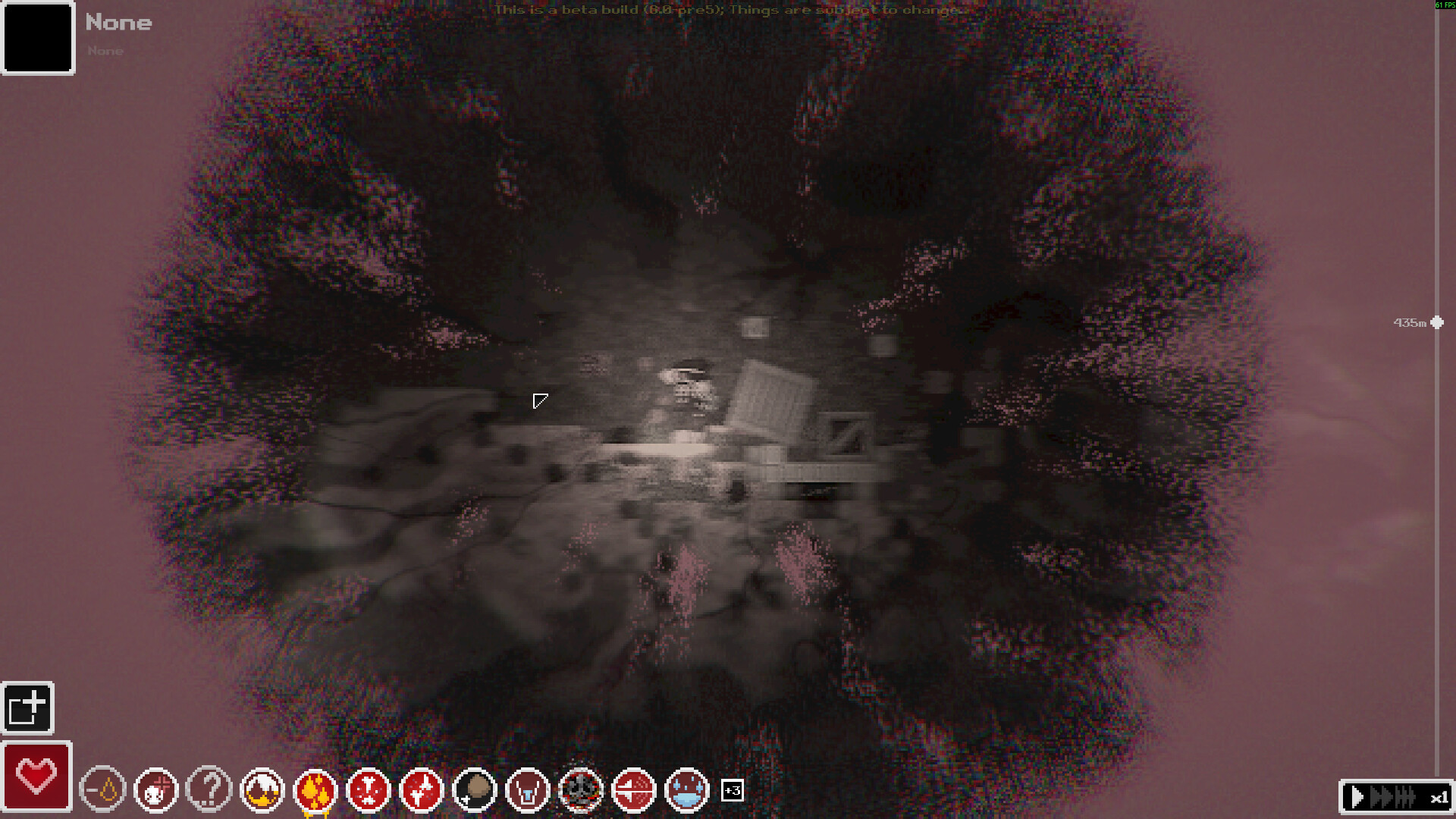
Recognize the threat before closing in
The demo's early threats include ambushing Shade crawlers, small biting Cave ticks and aggressively moving Sand stalkers; deeper encounters add Overgrown ticks, Thornbacks, the Elder Thornback and dangerous fixed plants. Retreat or take an alternate passage when you lack light or medicine, risk losing a limb, or would be trapped against terrain.
The encounter progression below describes the demo. The control and basic survival instructions referenced here describe Steam demo 7.0.1; keep the itch prototype and full release separate when comparing item values or encounter advice.
Threats along the demo descent
| Encounter | Threat and response |
|---|---|
| Shade crawlers: the demo's first layer | Common ambush threats. After contact, inspect for puncture bleeding, infection and venom rather than judging the encounter only by whether you escaped. |
| Cave ticks: added in layer 2 | Small biting enemies associated with venom and infection. Check bleeding and those conditions after a hit. |
| Sand stalkers: introduced in layer 3 | Aggressive movement makes separation a sensible priority. After an attack, inspect severe bleeding, limb integrity and possible dismemberment. |
| Overgrown ticks and Thornbacks: layer 5 | Ticks warrant bleeding, infection and venom checks. Thornbacks can cause severe bleeding or dismemberment, making an avoidable close encounter a poor trade. |
| Elder Thornback and fixed plants: layer 5 | Favor escape from the Elder Thornback. After a fixed grabbing plant or heavy impact, check fractures, pain and thorax damage. |
Choose an escape route before a fight
- Check your light before approaching the encounter. If you cannot reliably see the threat and surrounding terrain, retreat instead of committing to a fight you cannot read.
- Check your medical supplies before engaging. A shortage of medicine is a reason to bypass the enemy, particularly when the encounter risks lasting limb damage.
- Choose a route that maintains separation from the enemy. Avoid committing beside a wall or hazard that would leave you trapped when the creature closes in.
- Dig an alternate passage when terrain offers a way around the encounter. Swing a tool at the terrain to excavate, while accounting for the exhaustion digging causes.
- Take the escape route when facing an Elder Thornback. Make getting away your objective instead of relying on repeated attacks to keep a dangerous opponent stunned.
Treat engagement as a choice you make after checking the route and your supplies. If the encounter no longer leaves room to separate or retreat, reconsider it before chasing the enemy. Getting past the danger is a useful result even when you leave it alive.
Check injuries after you get clear
- Press R to open the health panel once you have escaped the immediate encounter. Use the panel to begin an injury check rather than assuming movement means you are safe.
- Inspect puncture bleeding, infection and venom after a Shade crawler or tick hit. These are the conditions to check even if the initial attack seemed manageable.
- Inspect bleeding and limb integrity after a Sand stalker or Thornback attack. Look for severe bleeding and possible dismemberment before planning another encounter.
- Inspect fractures, pain and thorax damage after a fixed grabbing plant or heavy impact. Surviving contact does not establish that the resulting injury is stable.
- Monitor an infected wound after applying antiseptic. In the documented Steam demo, the arrow on its icon showing the infection shrinking is the sign to look for.
Prepare for the injury, not just the enemy
Carry dressings before looking for another fight. In the documented demo, bleeding drains blood volume and can lead to infection, so the cost of contact can continue after the enemy is behind you. Early infection treatment also matters: untreated infections can be lethal.
Use that cost to judge whether an encounter is worth taking. A route that preserves your medicine and avoids irreversible damage deserves consideration even when fighting looks possible. Reassess after every hit instead of carrying the same plan into the next encounter.